When 12 Million Views Tells You Everything
Nintendo dropped the Switch 2 reveal on January 16th, 2025, and within 24 hours, the announcement trailer had racked up over 12 million YouTube views. Let me put that in perspective. That’s not just a strong showing. That’s the most-viewed Nintendo Direct-style announcement in the company’s entire history. More people watched a three-minute video of a console controller than tune in for most streaming series premieres. Nintendo didn’t just announce hardware. They announced the event of the year before most people even knew the event was happening.
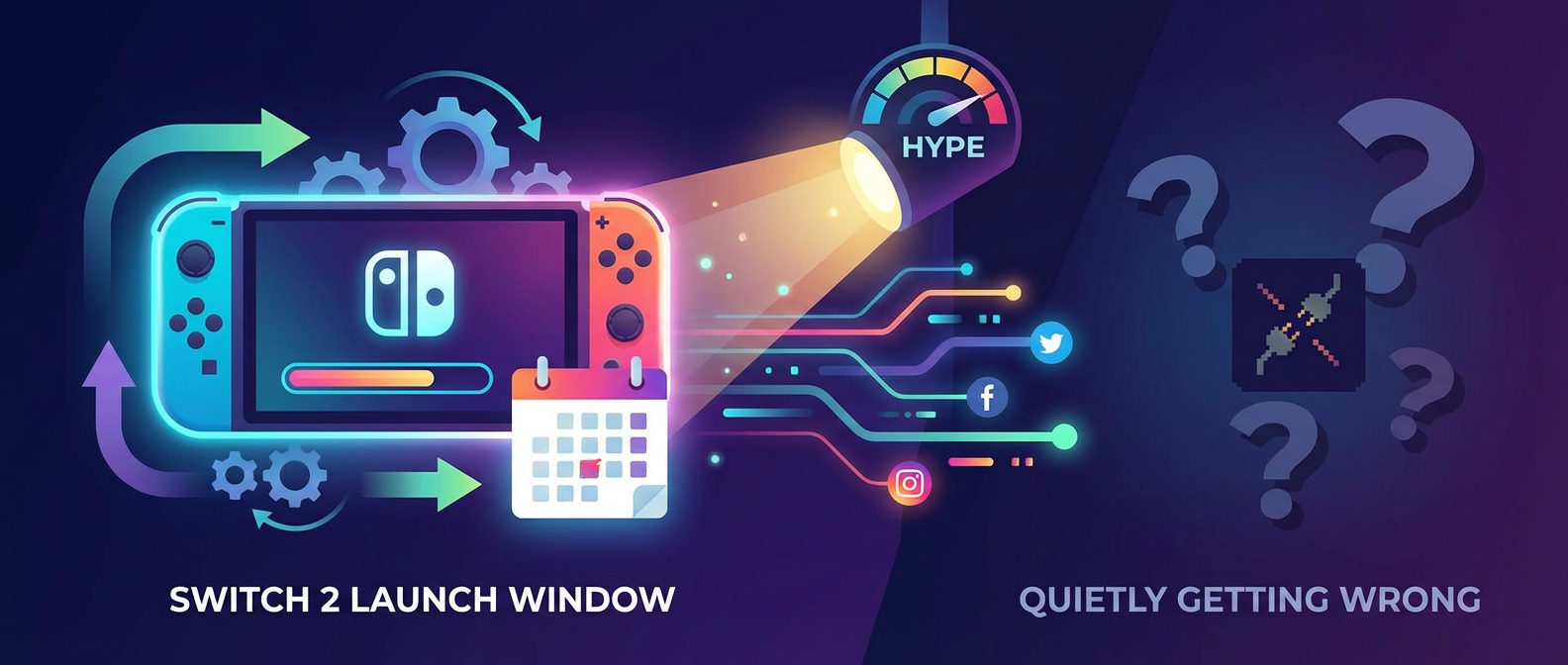
The numbers tell the real story. Within a week of that announcement, Nintendo’s stock climbed roughly 10 percent on the Tokyo Stock Exchange. Investors felt it. The cultural moment felt it. And yeah, I felt it too, sitting there watching that reveal knowing something genuinely significant was unfolding in real time. This wasn’t hype manufactured through endless teasing or artificial scarcity theater. This was a company that knew exactly how to communicate confidence without overselling.
The June 5th, 2025 global launch date is far enough away to build anticipation but close enough that it feels tangible. The March Nintendo Direct gives them room to show off software without deflating the reveal momentum. This is professional hype management at its finest, and honestly, it’s refreshing to watch a company execute this cleanly in an industry that usually fumbles the landing.
The Pricing Gambit Nobody’s Talking About Correctly
Here’s where I’m going to plant my flag and probably annoy some people, but that’s what I’m here for. The $449.99 USD retail price is not the story everyone should be focused on. Yes, it’s a meaningful jump from the original Switch’s $299 launch price. Yes, it signals that Nintendo believes in the generational leap they’re delivering. But the real pricing fight isn’t about the console itself.
Mario Kart World launches alongside the Switch 2 at $79.99 USD. That’s a first-party Nintendo title at a full $20 premium over the traditional $59.99 standard. This is the hill I’m dying on: this price point matters infinitely more than the hardware cost. We’re watching Nintendo officially capitulate to the AAA pricing normalization that’s been creeping into the industry for years. Every other publisher has been charging this for flagship releases. Now Nintendo is too. And while I understand the argument about increased development costs and the genuine technical improvements the Switch 2 represents, this decision still stings in a specific way.
Nintendo built their recent reputation partly on proving that premium gaming experiences didn’t require premium pricing. Breath of the Wild launched at $60. Tears of the Kingdom did the same. Now we’re watching that era quietly end. I’m not saying it’s wrong. I’m saying it’s a fundamental philosophical shift, and we should acknowledge it happened rather than pretend the console’s $449.99 price tag is the real story here.
The Game Chat Accessory Debacle Nobody Should Defend
This is where I stop being diplomatic, because some decisions are just indefensible, and Nintendo made one here. The Game Chat accessory for Switch 2 isn’t included. It costs extra. It also requires a separate USB-C camera peripheral that also costs extra. When this news broke in January, the backlash hit fast on social media, and outlets like IGN and Eurogamer rightfully covered it as a significant misstep.
Look, I genuinely love Nintendo. I will sit here and defend their design philosophy, their game quality, their commitment to fun over raw power. But this feels like nickel-and-diming players for a feature that should have been part of the baseline experience. Voice chat over internet isn’t a luxury add-on anymore. It’s table stakes for any modern gaming device. Making players purchase extra hardware just to talk to their friends during multiplayer sessions isn’t innovative. It’s just frustrating.
The worst part is that this decision undercuts all the goodwill Nintendo built with that flawless reveal. They nailed the announcement. The momentum was perfect. Then they quietly slipped this requirement into the fine print, probably hoping people wouldn’t notice. They noticed. We all noticed. And Nintendo Switch 2 Official Page discussions now include legitimate concerns about post-launch nickel-and-diming before launch day even arrives.
The Pre-Order Reality and Stock Market Breathing
Pre-order demand hit hard enough to move the needle on Nintendo’s stock price in a measurable way. Reuters Nintendo Financial Coverage reflected the market response, and the data doesn’t lie. People wanted this thing badly enough that shareholders felt confident about the company’s near-term future. That’s genuine consumer enthusiasm translating into institutional confidence.
But here’s what concerns me slightly. That enthusiasm is locked in based on potential, not certainty. The March Direct needs to show killer software. The launch window needs titles that justify the console’s existence and its new price point. Nintendo has the pedigree to deliver this. Zelda, Mario, Splatoon, Metroid. They have the franchises. But the pressure is higher now because the price is higher, because Game Chat isn’t included, and because Mario Kart World costs eighty dollars.
The early sales momentum exists. The question is whether Nintendo can maintain it once the reveal glow fades and players start asking whether all of this is actually worth it for them personally. That’s the real test ahead.
The Tier I’m Committing To
If I had to rank Nintendo’s launch window execution right now, I’d put it in the S-tier for announcement strategy and hype management, then knock it down to A-tier when you factor in the Game Chat accessory nonsense and the Mario Kart World pricing precedent. The hardware itself looks genuinely impressive. The market response validates that. The company proved it understands how to build momentum without artificial scarcity or endless pre-announcement teasers.
What I’m watching now is whether the March Direct lives up to the expectations that January announcement created. What software titles justify all of this? Can they convince skeptics that the generational leap is real? And will they address these frustrations around accessory costs before they lose the early adopters who are already having second thoughts?
Nintendo played this one beautifully so far. They’re not done executing yet. Tell me what you’re thinking about the Switch 2 announcement so far. Are you sold on the hardware, or are these accessory decisions making you hesitate? Drop your thoughts in the comments, and let’s talk about where you think this launch window heads from here.