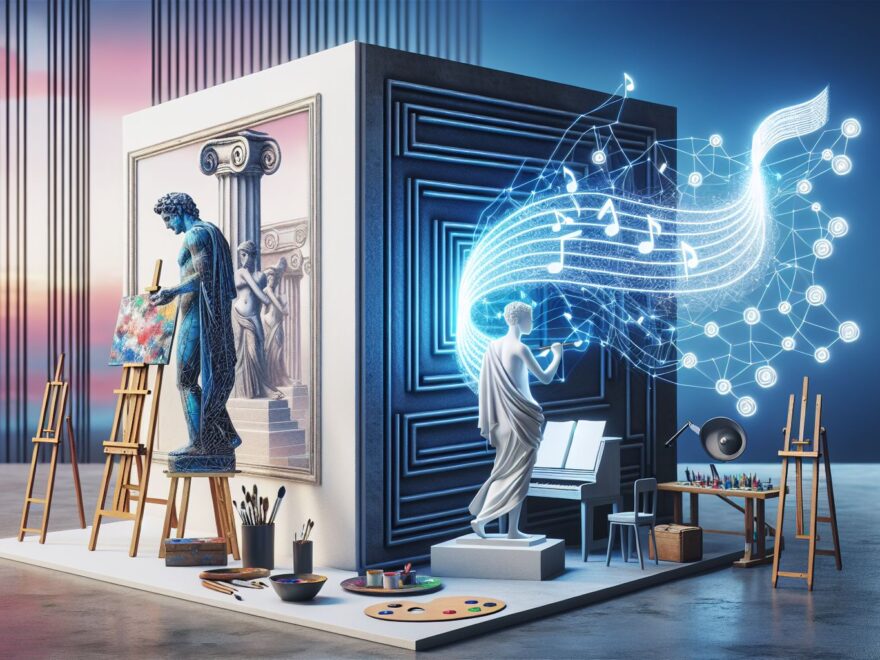
Hey tech tribe! Today, I’m super pumped to talk about something that’s been blowing my mind lately: Artificial Intelligence in the Creative Arts. You know, I always thought of AI as this number-crunching, car-driving thing. But turns out it’s picked up a paintbrush (metaphorically, of course) and started making some seriously cool stuff in art, music, and storytelling. So let’s go down this rabbit hole and see what’s happening when technology meets creativity!
AI: The Artist in Disguise
AI has always been kind of mysterious to me. One moment it’s working through complex algorithms, and the next, it’s writing symphonies. If you haven’t been paying attention, the creative side of AI has been exploding faster than you can say “deep learning.”
One of my recent favorites is OpenAI’s ChatGPT (yeah, the irony isn’t lost on me here). It’s not just answering questions but spinning stories and writing poems that would make Shakespeare do a double-take. And then there’s DALL-E, also from OpenAI, creating illustrations like some digital Picasso.
But it’s not just these big names. Companies everywhere are using machine learning to generate creative content. From building unique game worlds to creating Photoshop-level artwork, AI’s capabilities are honestly mind-blowing.
Let’s Talk Music: AI’s Notes and Rhythms
I’ll be honest, when I first heard AI was composing music, I rolled my eyes. Music is emotion, right? It’s human experience distilled into sound. But companies like Amper Music are making me eat my words. They’re using algorithms to create everything from moody indie film scores to pop beats that could genuinely compete with human composers.
Maybe I shouldn’t be shocked. Music is patterns, just like code or math, and AI excels at both. These deep learning systems analyze huge datasets of melodies, beats, and rhythms, then create new pieces without breaking a digital sweat.
A Brush with Digital Paint: AI in Visual Arts
This is where things get really crazy. Remember when people started struggling to tell AI-generated art from the real thing? AI models like DeepArt and DeepDream have gotten so good they’re almost impossible to distinguish from human work.
But AI art isn’t just about copying existing styles. It’s creating entirely new forms of expression. AI explores styles and techniques that humans haven’t even thought of yet, and the art world is watching with equal parts amazement and terror. There’s even an AI painting that sold for half a million at Christie’s: “Portrait of Edmond de Belamy.” Not bad for a non-human, right?
Word Wizards: AI in Storytelling
We talked about AI generating text, but let’s dig into what this means for storytelling. Whether it’s scripts, novels, or news articles, AI is getting involved in narrative creation.
Take Sudowrite, for example. It helps authors beat writer’s block by taking what you’ve written and suggesting where to go next. And we’re not talking about just finishing sentences here. It’s expanding plots, developing characters, adding layers of depth.
While AI storytelling is impressive, there’s this ongoing debate about where we draw the line between machine-generated and human-authored creativity. Every breakthrough comes with philosophical questions attached.
Philosophical Ponderings: Creativity and Authenticity
Here’s the big question: Can AI actually be creative? Or is it just really sophisticated remixing of existing ideas? This sparks some heated debates among creatives and tech people alike.
AI creativity is built on data mountains. It learns patterns, tests boundaries, and innovates within rules. But can something so process-driven ever truly grasp the abstract, emotional stuff that makes art deeply moving or personal?
The jury’s still out, but AI is definitely helping humans discover fresh creative concepts. It’s more like a skilled collaborator than a replacement. This partnership could lead to entirely new styles and approaches we haven’t imagined yet.
Obstacles and Opportunities
All this AI creativity isn’t without problems. There are complex issues around intellectual property rights for AI creations, data privacy concerns, and the big question of bias in training data.
But like any groundbreaking technology, these challenges come with the territory. They’re part of the price of discovery and could lead to important conversations about ethics and diversifying the creative world.
Wrapping It Up: The Future of AI in the Arts
AI in creative arts is like this rapidly growing tree, branching into new territories constantly. We’re standing at the edge of something huge, a world of possibilities we’re just starting to explore.
Remember those sci-fi movies where musicians jam with robot partners or painters have android assistants? That’s not dystopian fiction anymore. It’s actually happening. So keep watching as AI continues to push the boundaries of creativity, opening doors we didn’t know existed and playing this wild tune of innovation that’s hard to ignore.
So whether you’re coding your next big project or sketching in your notebook, remember: AI might just be the co-pilot in your creative journey, ready to inspire something amazing!